Finding your bearings in an ever-changing world.
When life feels messy, uncertain, or overwhelming, and you want to regain a sense orientation navigating ‘all the things’

Life changes. We change.
The conditions around us change.
Most of us were never taught how to orient ourselves through those changes.
Human Orientation is the practice of learning to find our bearings again.

This is a living field of practice.
Human Orientation continues to evolve through observation, practice, and curiosity-driven field experiments. Like the landscapes we navigate, it is living, responsive, and always inviting us to look a little closer, see things through a different lens.

Perhaps you’ve noticed...
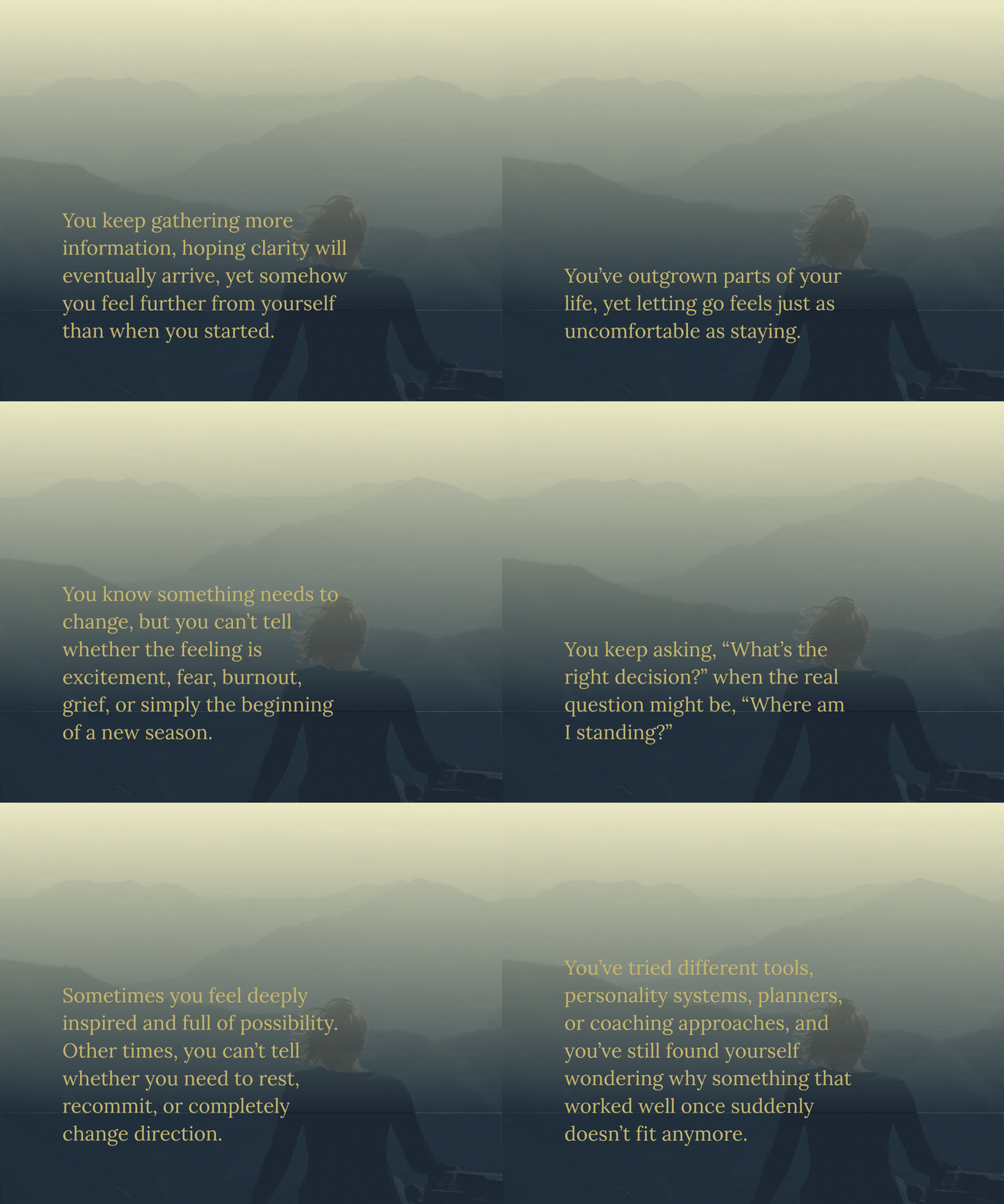
If any of these feel familiar, you are not behind, broken, or missing some secret everyone else seems to know.
Losing your bearings is part of being human.
Learning to find them again is a skill you can practice.
For years I’ve been trying to describe something I kept noticing.
People weren’t usually stuck because they lacked motivation. And they weren’t always missing information.
Often... They had simply lost their bearings and misreading their signals, the navigational beacons that help them feel like they are staying on course.

The journey of trying 'all the things'Like many personal growth followers, I spent years searching for clarity through books, courses, podcasts, and personality typing frameworks. Every experience gave me something valuable, but I kept feeling like I was missing the piece that helped me understand where I actually was.
I tried to describe my work using familiar words like coaching, framework, or methodology because those were the closest fit. But none of them captured what I kept returning to.
Eventually, I realized I wasn’t trying to create another self-improvement trend. I was finally finding language for something that had been quietly revealing itself all along… a way of understanding ourselves and navigating the ever changing terrain of being human.
I’ve come to call that field Human Orientation.
What is Human Orientation?
Human Orientation is the practice of finding your bearings in an ever-changing landscape.
It is the observing and noticing where we are, understanding what this season is asking of us, and responding in ways that help us regain our bearings, right in the messy middle of ‘all the things’.
Why it Matters
Most of us have never been taught how to navigate change in a holistic or sustainable way.
Instead, we’re taught to work harder, gather more information, make a better plan, or simply push through. Sometimes those things help. But often, what we’re really missing isn’t another strategy… it’s a way to understand where we are before deciding where to go next.
Human Orientation matters because it helps us...
recognize when we’ve lost our bearings without assuming something is wrong with us.
distinguish between needing more effort and needing different support.
understand the season we’re in instead of comparing ourselves to someone else’s.
respond to changing conditions with respond to changing conditions instead of reacting to them.
use tools, practices, and personal growth work at the time when they’re most likely to support us.
stop asking “What’s wrong with me?” and begin asking “What is this season inviting?”


You don't always need to know exactly where you're going
✦
Simply knowing where you are is enough
✦
You don't always need to know exactly where you're going ✦ Simply knowing where you are is enough ✦
Human Orientation isn’t simply an idea to understand.
It’s a practice to experience.
Like any skill, it develops through observation, reflection, and repeated practice. Over time, finding your bearings becomes less about searching for the right answers and more about learning to recognize the signals that help you navigate your own life with increasing confidence and care.
You don’t always need to know exactly where you’re going.
More often, you need to know where you are, what this season is asking of you, and what your next oriented step could be.
Human Orientation isn’t simply something to understand… it’s something to practice.
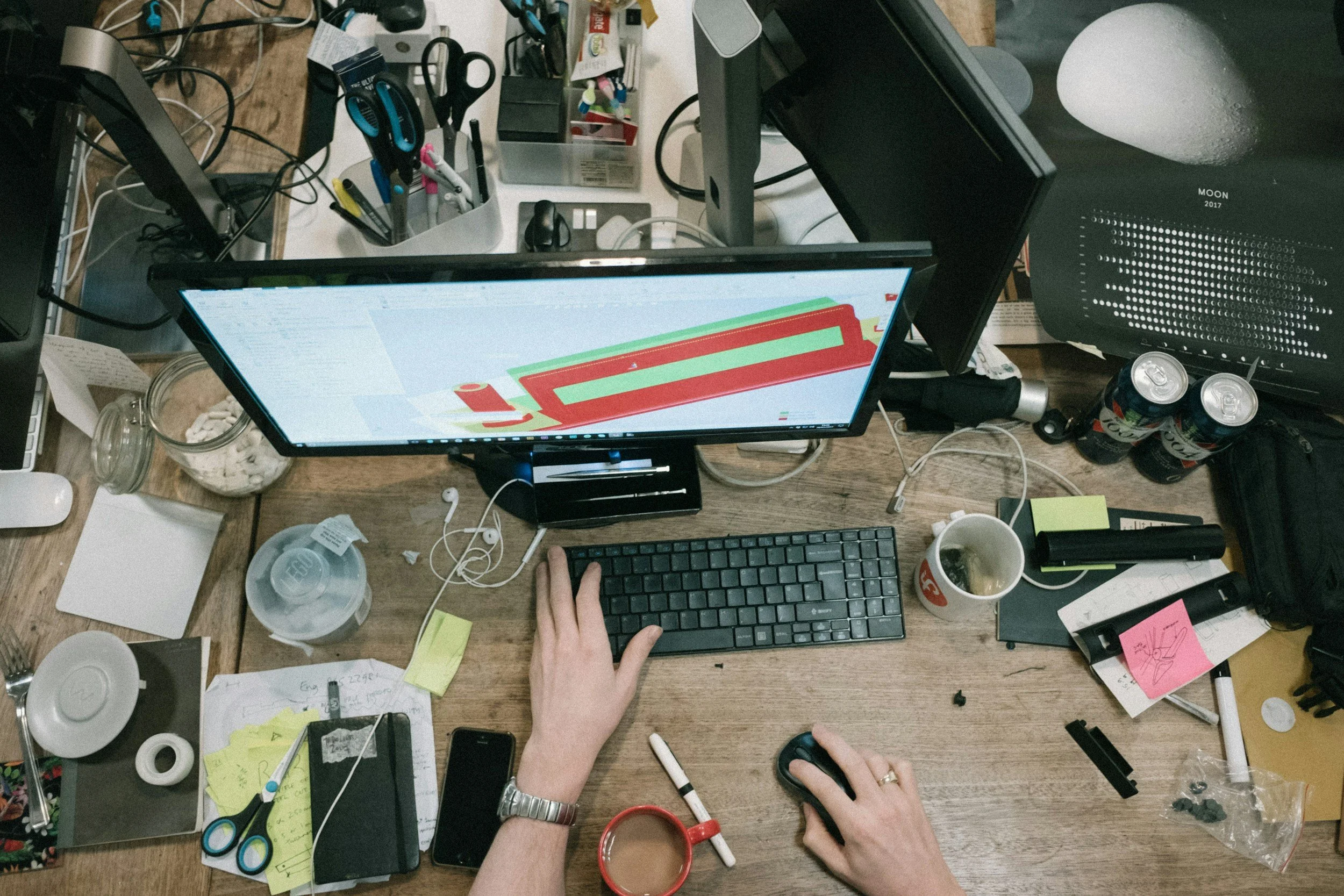
Human Orientation isn’t something we master once.It’s a practice we return to throughout our lives because life is always changing… and so are we.
The practice doesn’t ask you to escape the messiness of everyday life.
It supports you in becoming more skillful at navigating it.
The Practice Follows a Simple Rhythm
Become aware of what you’re experiencing without rushing to explain or fix it, through perspective or presence.
Notice.
Look a little closer. What signals, conditions, patterns, or stories might be shaping this moment? What season could you be standing in?
Orient.
Choose your next step from orientation rather than reaction, trusting that small, well-oriented actions often change more than force ever could.
Navigate.

The goal isn’t to figure everything out.

It’s to create enough perspective that orientation can begin to emerge.Over time…
This rhythm becomes less like a checklist and more like a way of moving through the world. You begin to notice your own patterns more quickly, respond with greater self-trust, and recognize that even moments of feeling lost can become invitations to find your bearings again.
Human Orientation isn’t practiced when life finally settles down.
It’s practiced exactly where you are.
In the conversations you’re having, the decisions you’re making, the transitions you’re navigating.
And in the ordinary moments that quietly shape a life.
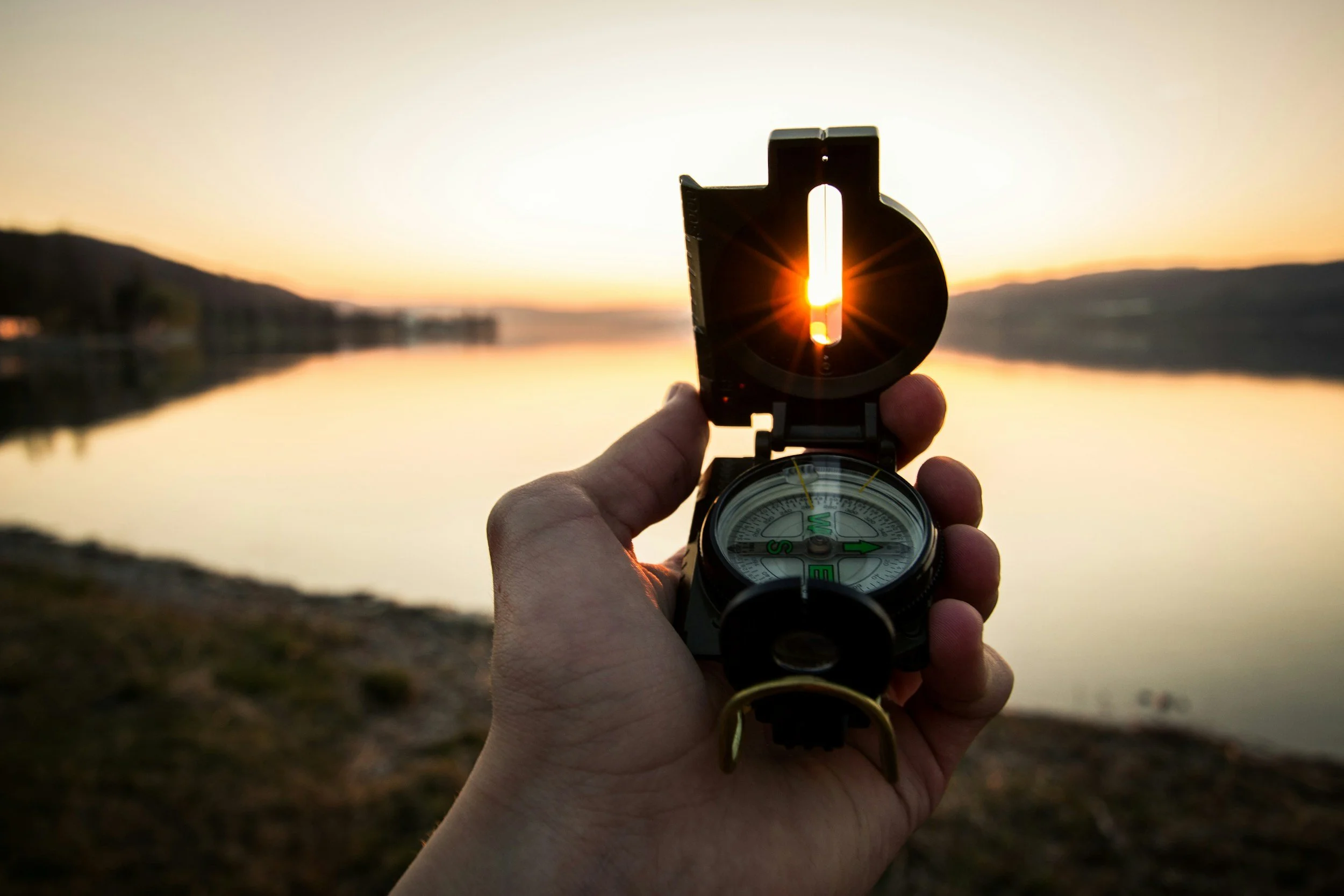
Begin the Practice
Wherever you begin, remember…
You don't have to have all the answers before you start. You simply have to begin paying attention.
When you lose your bearings, don’t ask, “What’s wrong with me?”
Ask, “What is this season inviting me to remember, tend, reclaim, or offer?”
Seasonal Field Report
Create a personal Field Report if you’d like a simple way to notice where you are and begin finding your bearings.
Field Notes
Read a Field Note if you enjoy learning through real-life observations and seeing Human Orientation in practice.
Newsletter
Join the newsletter if you’d like a weekly invitation to notice your own life a little more closely and practice alongside me.
Our goal isn't to become perfectly oriented. It's to become increasingly skillful at recognizing when we've lost our bearings and knowing how to find them again.I’m so delighted that you've found your way here. Let's explore the field together.